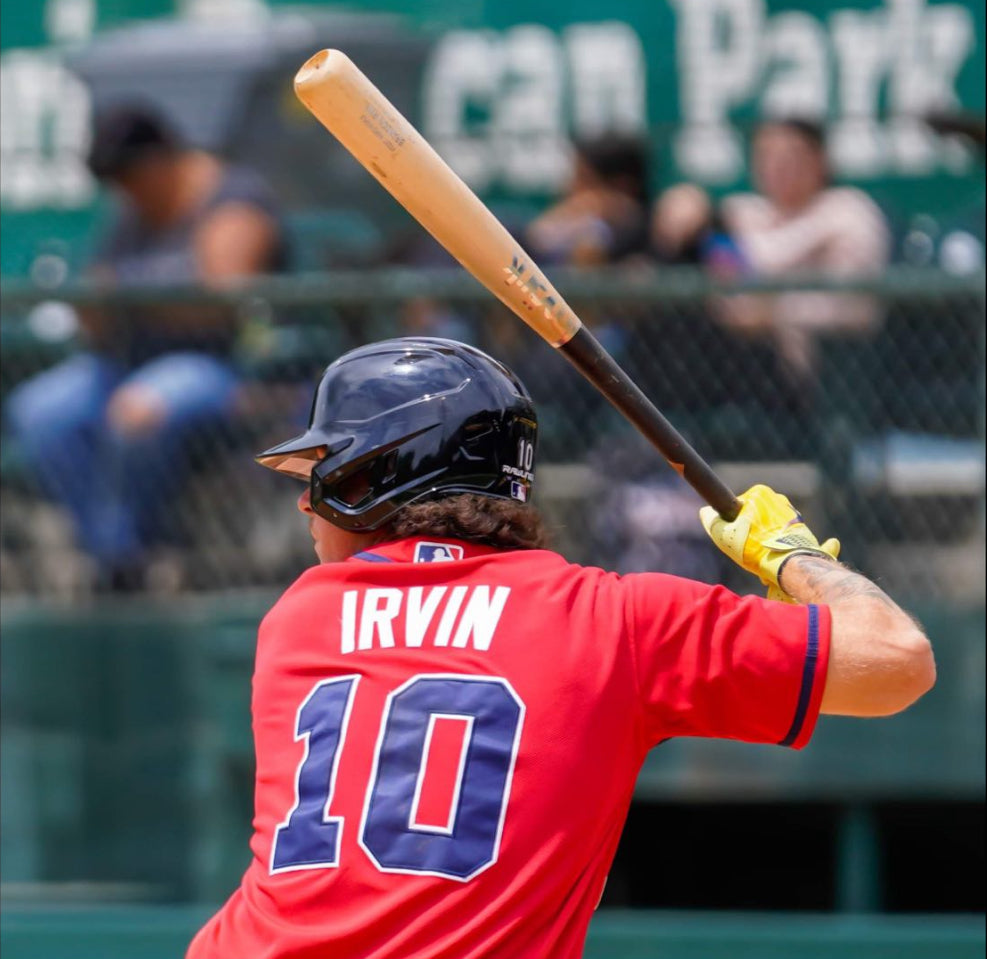
Baseball player in red jersey swings a MÄRK Lumber wood bat during a game, showcasing premium maple bat performance.

Training Bats

Filters

3 Results
  • HEAVY BAT HEAVY BAT
    Save 25%

    HEAVY BAT

  • ML-X ML-X
    Save 25%

    ML-X

  • ONE HANDER ONE HANDER
    ONE HANDER
    Save 25%

    ONE HANDER

Build your hitting practice around the right tools. Mark Lumber’s baseball training bat collection includes heavy bats, one-hand trainers, skinny bats and ML-X practice bats.

Compare tools for your hitting drills

Choose a model for the drill you plan to perform, and check the product’s length, weight and intended use before ordering. Training bats have different purposes and are not interchangeable with game bats.

Looking for a bat for competition? Browse our stock wood baseball bats or explore custom bats.

SHOP BY COLLECTION

FAQs

What is a training bat and why should I use one?

A wood training bat is designed to help players develop specific skills such as swing mechanics, strength, and bat speed. Unlike standard bats, a training bat can vary in weight and size to target different aspects of a player’s development. Weighted versions are particularly effective for building muscle memory and swing power. Practicing regularly with a wood practice bat sharpens coordination and timing, which translates directly to game-day performance. It helps improve hand-eye coordination and encourages better swing control. Players looking to level up their hitting ability can benefit from using a training bat in off-season and in-season workouts alike. Overall, it’s a valuable training aid that supports better performance, stronger mechanics, and consistent technique refinement at every stage of player development.


What is the difference between a weighted training bat and a regular baseball bat?

A weighted training bat is intentionally designed to be heavier than a regular game bat, introducing resistance to help build strength and increase swing speed. This added weight challenges a player’s muscles during practice and leads to improved bat velocity when transitioning to a standard bat. Training bats often come in different lengths and materials to simulate various game scenarios. A regular baseball bat, by contrast, is optimized for in-game performance—lighter, balanced, and built for control. Using a training bat before games or in your training routine enhances overall performance by developing power and muscle activation. The contrast between a training bat and your game bat can make your regular swing feel smoother, faster, and more powerful especially when alternating with a heavy wood training bat.


Can a training bat be used for all levels of play?

Yes! A wood training bat is suitable for players at every level, from beginners to professionals. For youth players, lighter versions of the training bat can be used to build proper form, coordination, and confidence at the plate. As players mature, heavier options help strengthen core swing mechanics and increase bat speed. Professional athletes use the training bat to refine timing, build explosive power, and reinforce advanced techniques. Coaches often integrate training bats into drills that isolate swing paths and balance, making them valuable for team-wide training. With a wide range of weights and sizes, the training bat adapts to all stages of development. It’s a versatile and essential tool for enhancing performance and mastering the fundamentals of hitting, regardless of age or experience.


How often should I use a training bat?

Using a wood training bat 2–3 times per week strikes a healthy balance between skill improvement and muscle recovery. This routine allows you to enhance your swing mechanics and strength without overloading your muscles or risking injury. For athletes targeting strength development or preparing for competitive play, incorporating the training bat more frequently may be helpful. However, overuse can lead to fatigue and decreased performance. Scheduling rest days between sessions ensures that muscles recover and adapt, resulting in greater long-term gains. Working with a coach or following a structured training plan can help determine the ideal training bat schedule for your goals. Ultimately, consistency and moderation are key—integrating this tool regularly will lead to noticeable improvements in swing speed, control, and overall hitting power.