


Maple Bats Guide

Maple Bats Guide
Maple Bats Guide – Everything You Need to Know About Maple Wood Bats
Maple wood bats have become the standard for serious hitters who value density, durability, and a firm feel through the zone. This guide explains exactly why maple baseball bats dominate modern baseball, how they compare to other wood species, and how to choose the right maple bat for your game. Whether you are transitioning from metal, refining your wood bat selection, or researching Canadian maple quality, this page is designed to give you clear, practical answers grounded in real bat-making experience.

What Makes Maple Wood Bats the Choice of Power Hitters
Maple wood bats, made from rock maple or hard maple, are valued for their density and tight grain structure. Over the last three decades, maple has become the dominant wood in professional baseball, representing seventy to eighty percent of bats used.
The shift to maple began in the 1990s as players sought a harder alternative to ash, gaining significant attention when Barry Bonds used a maple bat during his record-setting home run season. Maple’s density allows for better energy transfer from the bat to the ball, providing a solid feel preferred by power hitters. Its tight grain structure also minimizes flaking and splintering, ensuring consistent performance over time.


The Science Behind Maple Bat Performance
Maple is a diffuse porous wood, meaning its pores are evenly distributed rather than concentrated in rings. This structure creates uniform hardness across the barrel, which helps maintain consistency on repeated contact.
Compared to ash, maple is approximately twenty percent harder on average. That added surface hardness can translate to slightly higher exit velocity when contact is squared, often described as ten to fifteen additional feet on well-struck balls, depending on swing efficiency and impact location.
Instead of long fibers separating, maple compresses at the point of contact. Over time, repeated ball contact can actually harden the barrel surface further, reinforcing the bat rather than wearing it down.

What Makes Maple Wood Bats the Choice of Power Hitters
Maple wood bats, made from rock maple or hard maple, are valued for their density and tight grain structure. Over the last three decades, maple has become the dominant wood in professional baseball, representing seventy to eighty percent of bats used.
The shift to maple began in the 1990s as players sought a harder alternative to ash, gaining significant attention when Barry Bonds used a maple bat during his record-setting home run season. Maple’s density allows for better energy transfer from the bat to the ball, providing a solid feel preferred by power hitters. Its tight grain structure also minimizes flaking and splintering, ensuring consistent performance over time.
The Science Behind Maple Bat Performance
Maple is a diffuse porous wood, meaning its pores are evenly distributed rather than concentrated in rings. This structure creates uniform hardness across the barrel, which helps maintain consistency on repeated contact.
Compared to ash, maple is approximately twenty percent harder on average. That added surface hardness can translate to slightly higher exit velocity when contact is squared, often described as ten to fifteen additional feet on well-struck balls, depending on swing efficiency and impact location.
Instead of long fibers separating, maple compresses at the point of contact. Over time, repeated ball contact can actually harden the barrel surface further, reinforcing the bat rather than wearing it down.
Maple vs Ash Bat – Key Differences Every Hitter Should Know
The maple vs ash bat debate comes down to feel, flex, and forgiveness. Both are legitimate wood baseball bats, but they perform very differently in a hitter’s hands.
Maple is denser and stiffer than ash. Ash bats flex more during the swing and on contact, creating what many describe as a trampoline effect. This flex can help some hitters generate bat speed, but it also absorbs more energy at impact.
Maple bats typically have a slightly smaller effective sweet spot, often one to two inches smaller than comparable ash models. However, when contact is made on that sweet spot, maple delivers a firmer, more direct transfer of energy.
Durability also differs. Ash tends to flake along the grain before breaking, while maple usually maintains its surface until failure, at which point it can break more cleanly. Understanding these breakage patterns helps players choose the wood that best suits their swing consistency.
Why Wood Type Matters
Wood type plays a key role in the feel, durability, and weight distribution of wood baseball bats. Different species offer distinct density and grain structures, which influence how a bat swings and responds on contact. Some woods feel harder and more rigid, while others provide slightly more flex. Understanding wood characteristics helps players choose a bat that matches their swing preferences, usage level, and expectations for longevity—without changing the fundamentals of performance or technique.
When to Choose Maple Over Ash
Maple is often the better choice for power hitters who drive through the ball rather than relying on bat flex. Players who consistently square up pitches near the label or inner barrel also benefit from maple’s resistance to flaking.
Experienced wood bat hitters who prefer a stiff feel and feedback on contact usually gravitate toward maple. It is also a strong option for players prioritizing durability and barrel integrity over forgiveness.
When Ash May Be the Better Choice
Ash may suit contact hitters who rely on bat speed and value a larger, more forgiving sweet spot. Players who frequently miss toward the end of the barrel often find ash more accommodating.
Beginners transitioning to wood bats sometimes start with ash due to its flex and traditional feel. Vintage or throwback league players may also prefer ash for its historical connection and softer response.
Maple vs Birch Bat – Understanding Your Options
Birch bats are often described as the middle ground between maple and ash. Yellow birch is slightly softer than maple but harder than ash, offering a blend of flex and firmness that appeals to a wide range of hitters.
Unlike maple, birch hardens gradually with use. A new birch bat may feel softer at first, then stiffen as the fibers compress over time. Maple, by contrast, provides immediate hardness right out of the wrapper.
The weight between maple and birch bats is generally similar, but maple maintains a more rigid feel throughout its lifespan. This consistency is a major reason many professional players continue to prefer maple for raw power.
Which Wood Is Right for Your Swing Style
Power hitters typically benefit most from maple’s stiffness and density. Contact-focused hitters often lean toward ash or birch for added forgiveness. All-around hitters may find birch offers a balanced compromise.
First-time wood bat users sometimes choose birch as an entry point, while those confident in barrel control usually transition to maple once their swing is dialed in.
How to Choose the Best Maple Bats for Your Game
Selecting the best maple bats starts with understanding how bat specifications interact with your swing mechanics. Maple rewards precision, so choosing the right configuration matters.
Most adult wood baseball bats fall within a drop weight range of minus two to minus four. Heavier bats can increase momentum, while lighter options support bat speed. Barrel diameter also plays a role, with larger barrels offering more margin for error at the cost of swing weight.
Weight distribution is another key factor. End-loaded maple bats place more mass toward the barrel, favoring power hitters. Balanced models distribute weight more evenly, helping with control and bat speed.
Handle thickness affects comfort and feedback. Thinner handles allow for more whip but transmit more vibration, while thicker handles provide stability and durability.
Maple Bat Selection by Player Type
Power hitters often choose end-loaded turn models with slightly larger barrels. Contact hitters may prefer balanced designs with thinner handles for quicker hands.
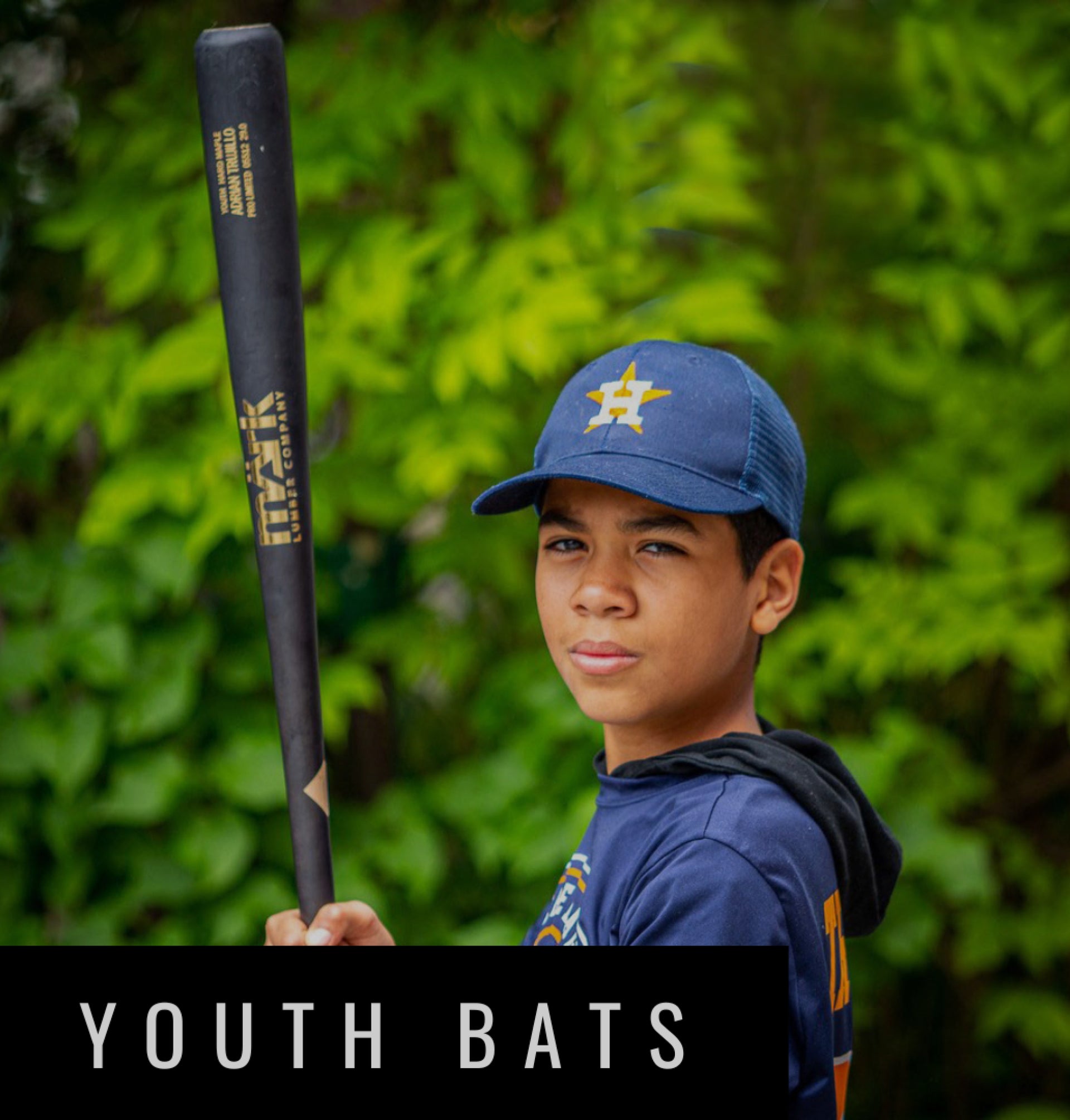
Youth players should focus on proper sizing and manageable drop weight to maintain control. Maple training bats and game bats should also be separated, as repeated high-volume contact can accelerate wear.
Understanding the Ink Dot Test
The ink dot test verifies grain slope alignment within professional standards. Bats that pass meet strict grain orientation requirements used at the highest levels of baseball.
This certification helps identify pro-grade quality by ensuring the grain runs straight through the bat. Mark Lumber maple bats meet these standards through careful billet selection and inspection.
The Canadian Maple Advantage – Why Cold Climate Wood Matters
Canadian rock maple grows in colder climates, particularly in Quebec forests, where long winters slow growth. Slower growth produces denser wood with tighter grain patterns, ideal for bat manufacturing.
Each billet is hand-selected for grain straightness and density before turning. This process reflects a long tradition of Quebec craftsmanship focused on consistency rather than volume.
Cold-climate maple often outperforms warmer-climate sources due to its structural integrity. Mark Lumber applies rigorous quality control standards to ensure every maple bat meets performance and durability expectations.
Hard Rock Maple Bat Characteristics and Benefits
Hard rock maple refers specifically to sugar maple, not softer species such as red or silver maple, which are unsuitable for wood baseball bats. Hard rock maple typically falls within a specific gravity range of approximately sixty-three to sixty-five percent.
Kiln drying is used to control moisture content, stabilize weight, and reduce future movement. Proper moisture levels are essential for maintaining consistent swing weight and balance.
With repeated contact, maple fibers compress rather than separate, gradually hardening the barrel surface and reinforcing the hitting zone.
Pros of Maple Baseball Bats
Maple offers maximum energy transfer and a firm feel at contact. It is durable, resistant to flaking, and capable of maintaining a smooth finish for custom options. Many players also appreciate the distinctive crack sound on solid contact.
Cons of Maple Baseball Bats
The smaller sweet spot requires disciplined barrel control. Mishits can result in more hand sting compared to softer woods. The heavier feel may challenge younger players, and maple can gain weight if exposed to humidity. When failure occurs, breakage is typically rigid rather than gradual.
Maple Bat Care and Maintenance Guide
Proper care extends the life of maple wood bats. Always hit with the correct grain orientation, typically label up or down, to reduce stress on the fibers.
Store bats in a dry environment away from excess moisture or temperature swings. Maple does not require bone rubbing, but keeping the surface clean helps maintain hardness.
Inspect your bat regularly for cracks or soft spots. When structural integrity is compromised, retire the bat to avoid unpredictable breakage. Canadian players should be especially mindful of climate changes between indoor and outdoor environments.




MW38
Regular price
$175.00 USD


TS33
Regular price
$175.00 USD


ML-110
Regular price
$170.00 USD


ML-271 YOUTH 2-1/4''
Regular price
$130.00 USD

Find Your Perfect Maple Baseball Bat
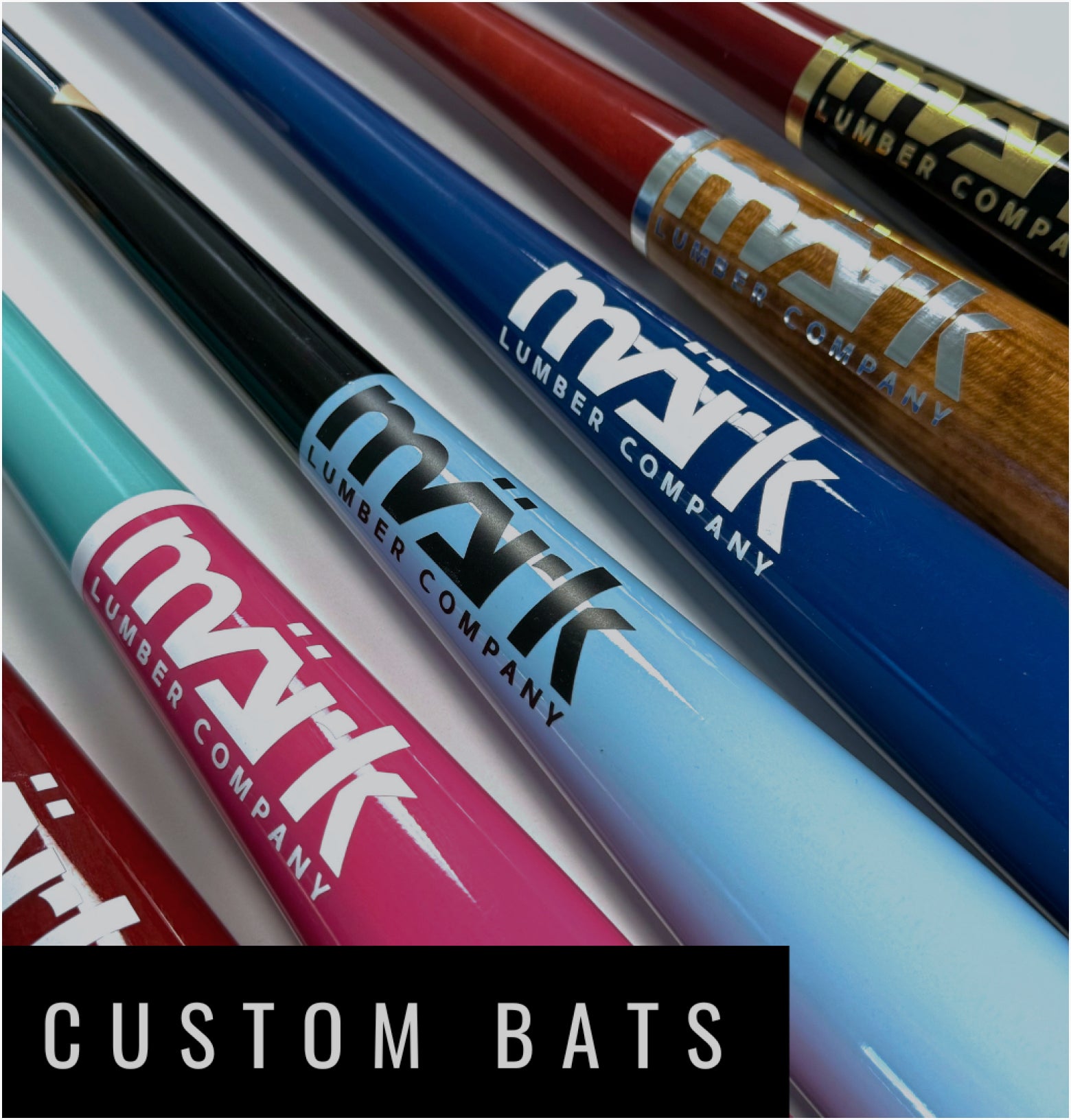
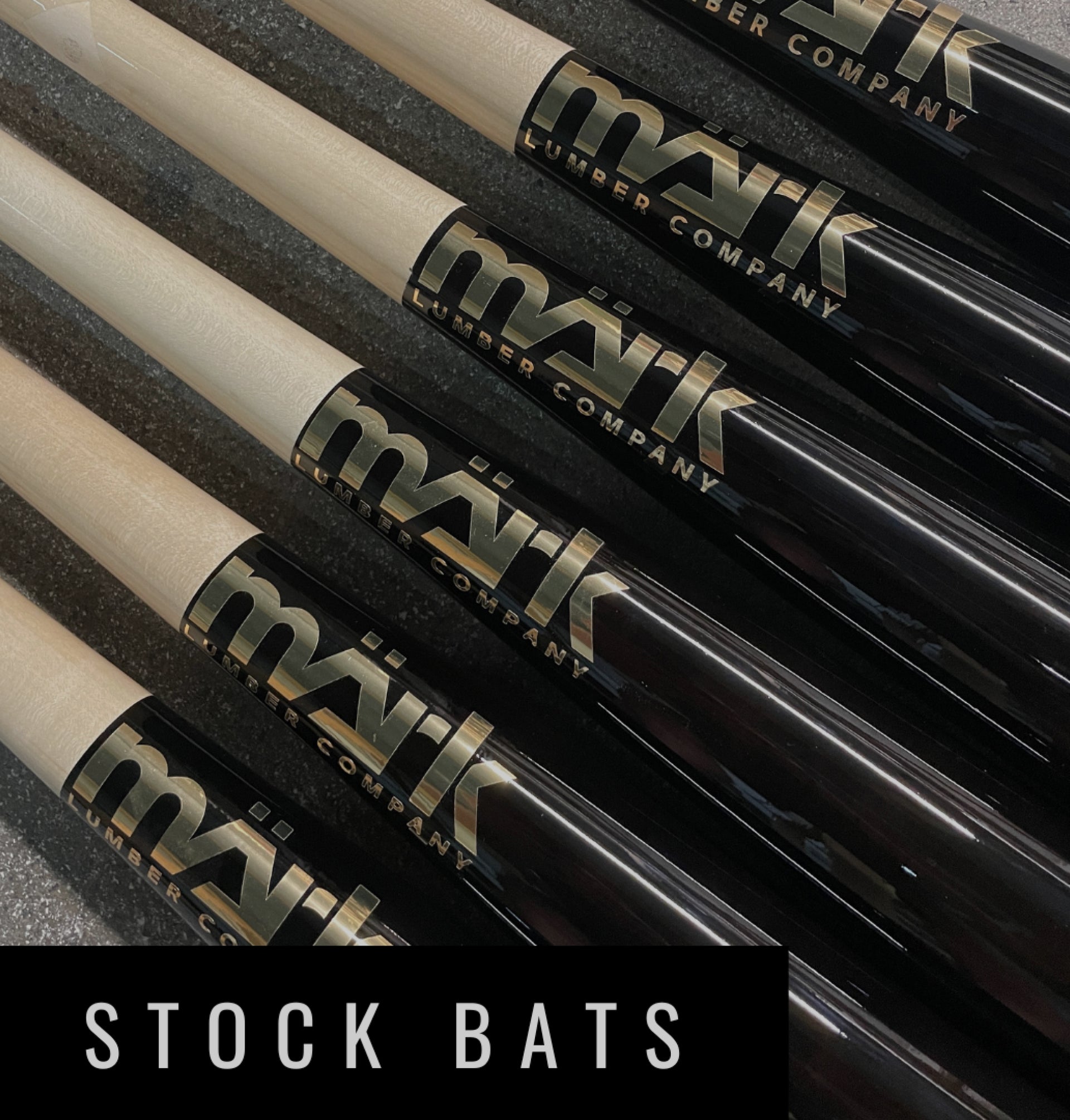
Mark Lumber offers a full range of maple baseball bats crafted from Canadian rock maple. Players can explore stock models or use the custom bat builder to select options based on fit and feel preferences.
Every bat is made from pro-grade billets and built with consistency in mind. Explore the maple bat collection and sizing resources to find the model that matches your swing and level of play.

Find Your Perfect Maple Baseball Bat
Mark Lumber offers a full range of maple baseball bats crafted from Canadian rock maple. Players can explore stock models or use the custom bat builder to select options based on fit and feel preferences.
Every bat is made from pro-grade billets and built with consistency in mind. Explore the maple bat collection and sizing resources to find the model that matches your swing and level of play.
FREQUENTLY ASKED QUESTIONS
Are maple bats legal in all leagues?
Maple wood bats are legal in many baseball leagues, but legality depends on the specific rules of each organization. Most adult wood bat leagues, collegiate summer leagues, and professional leagues allow maple bats that meet approved standards, including proper grain orientation. Some youth and high school leagues restrict wood bats entirely or require BBCOR-certified metal bats during regular season play. Tournaments or training settings may have different allowances. Always check your league or tournament rulebook before purchasing, as legality is determined by governing bodies, not bat manufacturers.
How long does a maple bat last?
The lifespan of a maple baseball bat depends on how often it is used, the quality of contact, and how well it is cared for. Players who consistently square the ball on the barrel will generally get longer life from maple due to its dense structure. Frequent mishits, especially near the handle or end of the barrel, can shorten the lifespan. Proper storage, correct grain orientation during hitting, and avoiding excessive moisture all help extend durability. Maple does not gradually flake like ash, so performance typically remains consistent until structural failure.
Why do maple bats break differently from ash?
Maple and ash have different grain structures, which explains their distinct break patterns. Ash is a ring-porous wood with long fibers that tend to separate and flake before the bat breaks. Maple is diffuse porous, with a tighter, more uniform grain. Instead of flaking, maple compresses at the contact point and maintains surface integrity. When maple does fail, it usually breaks more cleanly due to its stiffness and density. This difference does not indicate lower quality, but rather reflects how each wood responds to repeated impact.
What is the best maple bat for high school?
The best maple bat for high school players is one that matches the athlete’s strength, swing mechanics, and league requirements. Many high school players use maple bats for training, tournaments, or wood bat events rather than regular season play. A balanced maple bat with an appropriate drop weight helps maintain control while developing strength. Barrel size and handle thickness should support consistent contact rather than maximum mass. Because maple is less forgiving than other woods, proper sizing and experience with wood bats are important factors when selecting a model.